
À Sablet dans le Vaucluse, une école primaire fait figure de pionnière en matière de chauffage bas carbone. La municipalité a opté pour une solution innovante et écologique pour remplacer son ancienne chaudière au fioul, démontrant son engagement envers la transition énergétique mais aussi le réduction des coûts liés au chauffage des infrastructures.
L’école de Sablet, datant des années 1950, nécessitait une rénovation complète, notamment en termes d’isolation et de système de chauffage. La mairie a entrepris des travaux d’envergure visant à améliorer l’efficacité énergétique du bâtiment de 850 m².
Avant de s’attaquer au système de chauffage, la municipalité a procédé à une isolation complète d’une partie des bâtiments, incluant la salle de motricité. Cette étape cruciale a permis de réduire considérablement les besoins énergétiques de l’établissement.
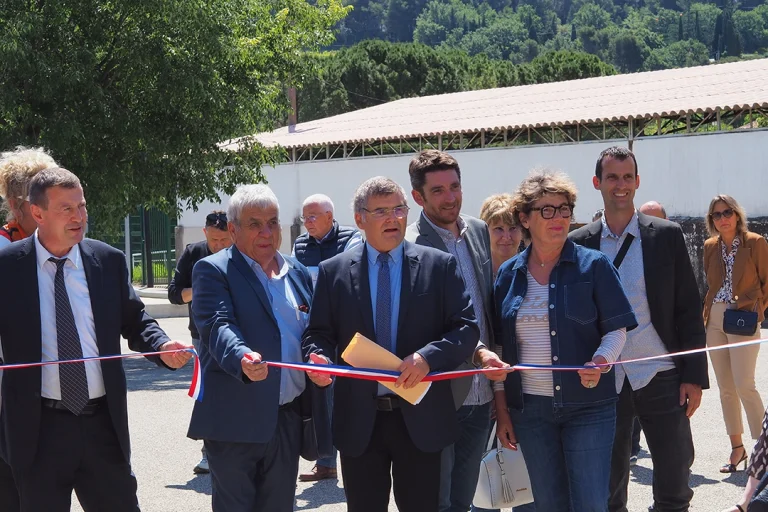
Après avoir étudié plusieurs options, dont la cogénération bois, le gaz et l’aérothermie, la mairie a finalement opté pour un système de chauffage bas carbone basé sur la géothermie. Cette solution associe une pompe à chaleur (PAC) réversible eau/eau à un champ de sondes géothermiques verticales.
Le choix s’est porté sur une PAC GeoTwin 4 du fabricant français ARKTEOS, d’une puissance de 52 kW. Cette installation de chauffage bas carbone couvre 96% des besoins énergétiques en chauffage de l’école, permettant ainsi de réduire considérablement les émissions de CO2.
Le chauffage bas carbone par géothermie présente de nombreux avantages :
– Réduction des émissions de CO2 : La mairie de Sablet prévoit de réduire ses émissions de 30 tonnes à seulement 5 tonnes par an.
– Économies d’énergie : Le retour sur investissement est estimé à six ou sept ans.
– Confort thermique : Le système assure à la fois le chauffage en hiver et le rafraîchissement en été.
– Durabilité : Les sondes géothermiques ont une garantie de 50 ans et une durée de vie minimale de 100 ans.
Le système de chauffage bas carbone installé à l’école de Sablet repose sur l’exploitation de la chaleur du sous-sol. Voici les principales composantes de cette installation :
Sondes géothermiques verticales : 9 sondes Terra Extrem Neo d’Elydan ont été installées à 140 m de profondeur. Ces sondes captent la chaleur du sol.
Pompe à chaleur : La PAC GeoTwin 4 d’Arktéos transfère la chaleur captée par les sondes vers le système de distribution de l’école.
Ventilo-convecteurs : 15 unités du fabricant italien Sabiana ont été installées au plafond de chaque pièce pour diffuser la chaleur ou le froid.
Système d’appoint : Une petite chaudière fioul de 30 kW de marque Viessmann sert d’appoint et de secours en cas de panne de la PAC.
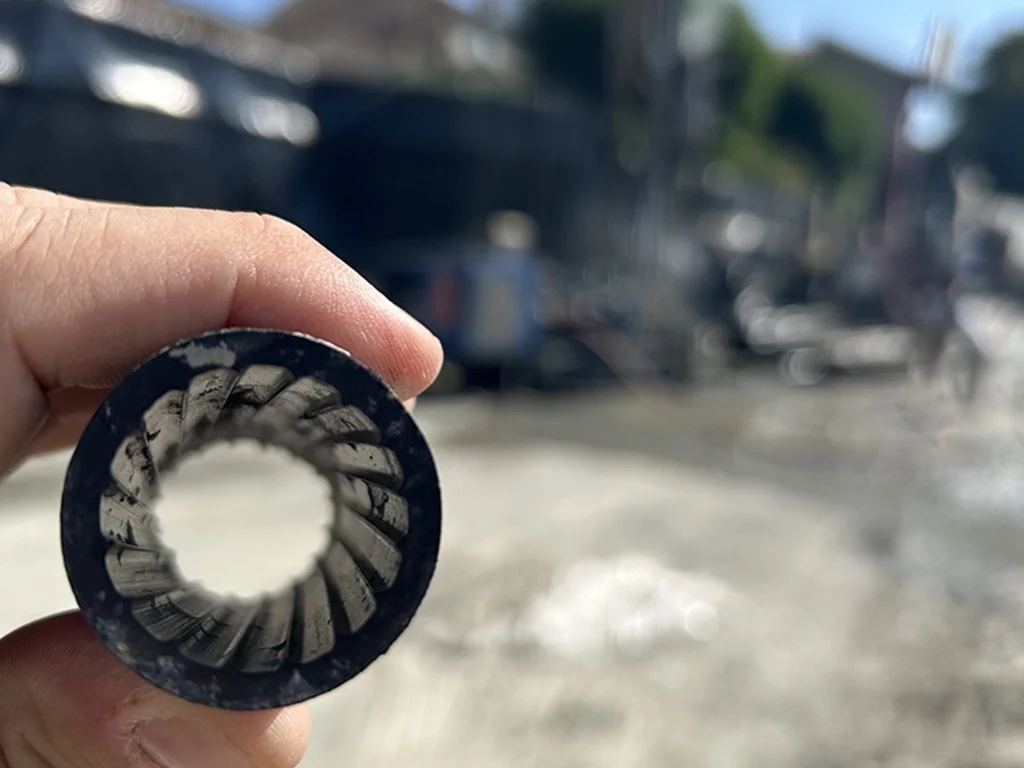
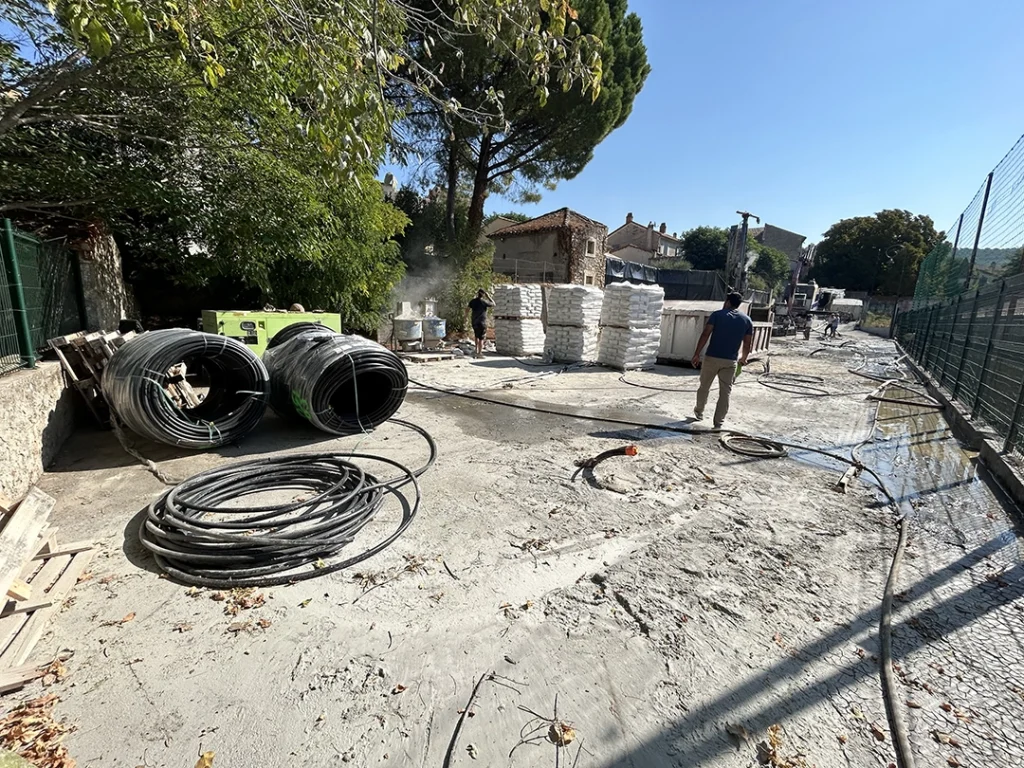
Une pompe à chaleur géothermique (eau-eau) fonctionne en exploitant la chaleur du sous-sol. Voici les principales étapes de son fonctionnement :
♨️ Captage de la chaleur : Un fluide caloporteur circule dans des sondes géothermiques verticales installées dans le sol, absorbant la chaleur naturelle de la terre
↗️ Transfert de chaleur : Le fluide caloporteur, réchauffé par le sol, est pompé vers la pompe à chaleur
➕ Amplification : La pompe à chaleur, utilisant un cycle thermodynamique, amplifie la chaleur captée pour atteindre une température plus élevée
🔀 Distribution : La chaleur amplifiée est transférée au système de chauffage du bâtiment, généralement via un réseau de ventilo-convecteurs ou de planchers chauffants
❄️ Cycle inverse : En été, le système peut fonctionner en mode rafraîchissement en inversant le cycle, extrayant la chaleur du bâtiment pour la rejeter dans le sol
Bien que non utilisé dans le projet de Sablet, il est intéressant de mentionner une autre technique de chauffage bas carbone par géothermie : le système à corbeilles. Ce dispositif fonctionne sur le même principe que les sondes verticales, mais utilise des échangeurs thermiques en forme de corbeille installés horizontalement à faible profondeur (environ 3 à 5 mètres).
– Une installation moins coûteuse que les forages profonds
– Un système adapté aux terrains où les forages profonds sont impossibles
– Une emprise au sol plus importante, mais idéal pour les grands terrains
Le fonctionnement est similaire à celui des sondes verticales : un fluide caloporteur circule dans les corbeilles, capte la chaleur du sol, puis la transfère à une pompe à chaleur qui l’amplifie pour chauffer le bâtiment.
La mise en place d’un système de chauffage bas carbone comme celui de l’école de Sablet présente certains défis :
– Coût initial élevé : Le coût total du projet s’élève à 267 800 euros, incluant la maîtrise d’œuvre, les travaux de forage, l’installation CVC et le raccordement électrique.
– Complexité technique : L’installation requiert l’intervention de professionnels spécialisés, comme la SARL Anaya Crueize qui a remporté l’appel d’offres CVC.
– Planification rigoureuse : Les travaux ont dû être réalisés en plusieurs phases, principalement pendant les vacances scolaires, pour minimiser les perturbations.
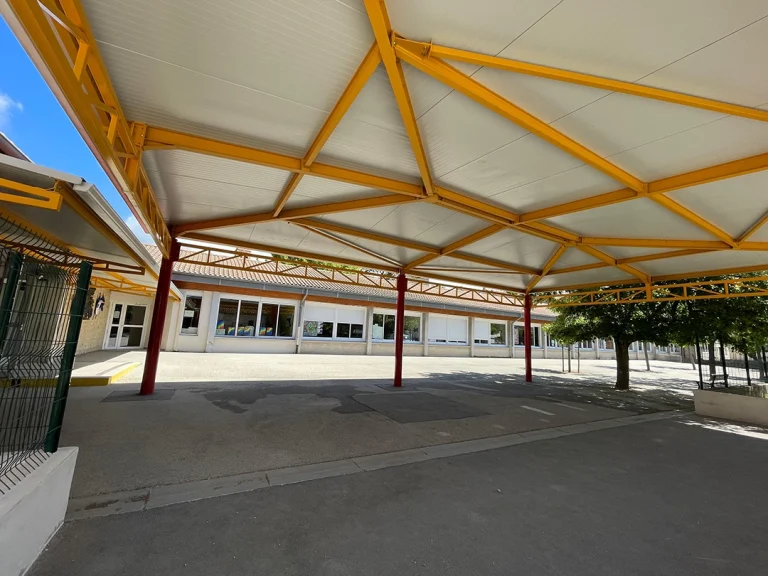
Le chauffage bas carbone par géothermie installé à l’école de Sablet illustre parfaitement les possibilités offertes par les technologies modernes pour réduire l’empreinte carbone des bâtiments.
Cette solution combine efficacité énergétique, confort thermique et respect de l’environnement.
Alors que la lutte contre le changement climatique s’intensifie, le chauffage bas carbone apparaît comme une solution d’avenir pour les bâtiments publics et privés. L’exemple de Sablet montre que, grâce aux aides financières et à l’expertise d’entreprises spécialisées, ces technologies sont désormais accessibles et peuvent être déployées à grande échelle, dans une large typologie de constructions.
Le succès de ce projet de chauffage bas carbone ouvre la voie à une généralisation de ces solutions, contribuant ainsi à la transition énergétique et à la réduction des émissions de gaz à effet de serre dans le secteur du bâtiment.
Depuis 2025, le Groupe Elydan propose des services de forages d’eau et de forages géothermiques via sa filiale Geo Connect Energies.
Sur le site web geoconnectenergies.com, retrouvez également une liste de produits et matériels sur mesure, ainsi que tous vos contacts pour vous aidez à bâtir des projets de réseaux de chaleur géothermique !
Lire ici notre retour d’expérience sur l’installation d’un système de chauffage alimenté par des sondes géothermiques Elydan, au Mémorial National Australien Sir John Monash, à Fouilloy dans la Somme.