Dans un monde où la durabilité et l’efficacité énergétique sont devenues des priorités, l’industrie des canalisations connaît une véritable révolution grâce au Polyéthylène PE100. Cette innovation, portée par des entreprises comme Elydan, offre une alternative écologique et performante aux matériaux traditionnels tels que la fonte. Explorons ensemble les avantages considérables du PE100 et son impact sur l’avenir de l’industrie des canalisations.
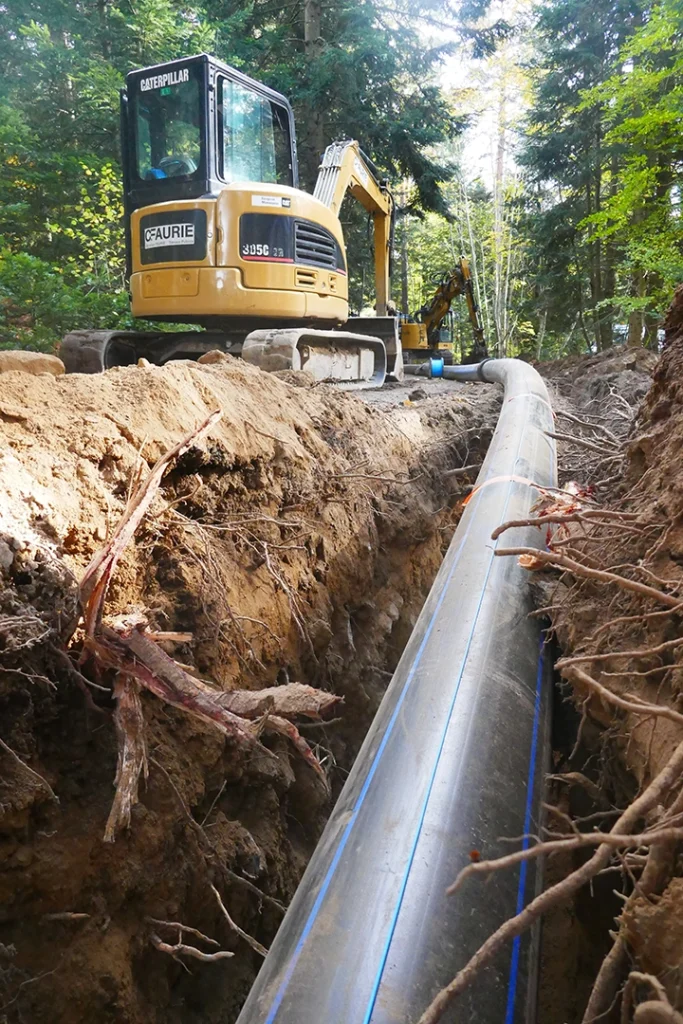
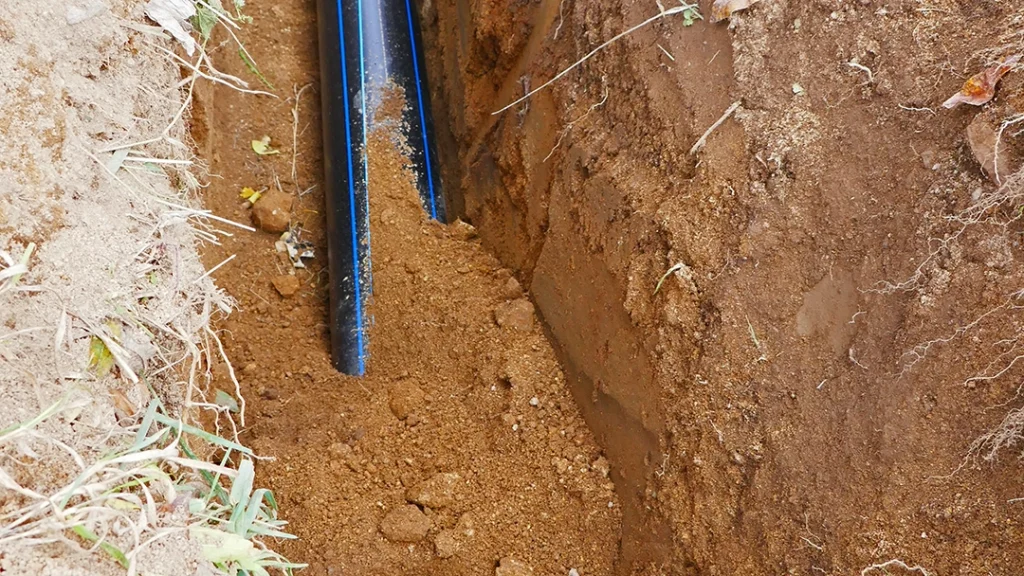
PROLINEAR RCD peut être mis en œuvre sans enrobage de sable, permettant l’économie des matériaux d’apports et facilitant la logistique des chantiers, puisque la tranchée peut être remblayée directement avec ses propres déblais. Sa très haute résistance au phénomène de « point dur » et à la fissuration lente.
La différence de température de fusion entre le PE100 et la fonte n’est que la partie émergée de l’iceberg en termes d’avantages environnementaux. La production de tubes en PE100 s’avère globalement beaucoup moins énergivore que celle des tubes en fonte. Cette efficacité énergétique se traduit directement par une réduction significative de l’empreinte carbone.
En choisissant le PE100, les fabricants comme Elydan contribuent activement à la lutte contre le changement climatique. Le bilan carbone des canalisations en polyéthylène peut être jusqu’à cinq fois plus faible que celui des alternatives en fonte sur l’ensemble de leur cycle de vie.
Le PE100 ne brille pas uniquement par son efficacité énergétique, mais aussi par ses performances exceptionnelles sur le terrain. Voici quelques-uns de ses atouts majeurs :
Flexibilité : Les tubes en PE100 ont une capacité remarquable à se déformer sans rompre. Cette propriété leur permet de résister efficacement aux mouvements de terrain, faisant du PE100 un choix idéal pour les sols instables ou de faible portance.
Résistance à la corrosion : Contrairement à la fonte, le PE100 est totalement insensible à la corrosion, qu’elle soit d’origine chimique ou électrique. Cette caractéristique permet son utilisation dans tous types de sols, même les plus humides ou corrosifs, sans nécessiter de protection supplémentaire.
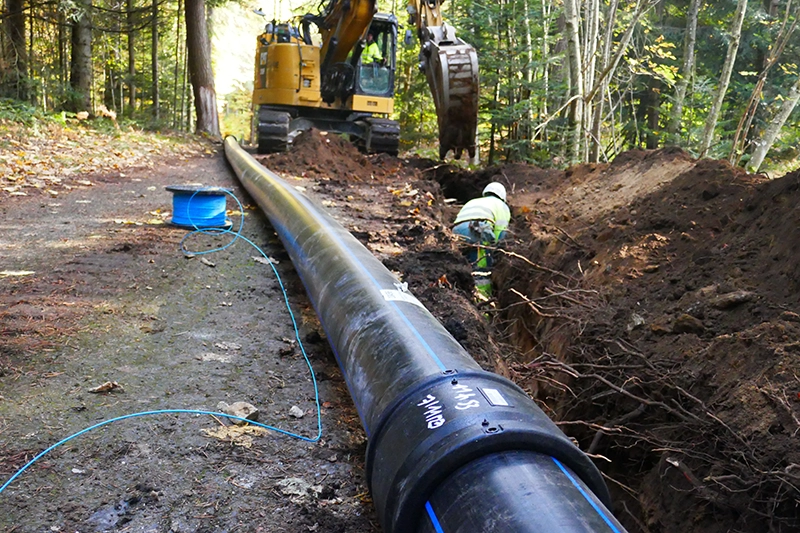
Légèreté : Les canalisations en PE100 sont en moyenne trois fois plus légères que leurs équivalents en fonte. Cet avantage facilite considérablement le transport et l’installation, réduisant ainsi les coûts et l’impact environnemental liés à ces opérations.
Durabilité : Les tubes en PE100 sont conçus pour une durée de vie exceptionnelle, pouvant dépasser 100 ans. Cette longévité remarquable en fait une solution particulièrement durable pour les réseaux d’eau potable.
Étanchéité : Les raccordements soudés des tubes en PE100 créent des réseaux homogènes et mono-matière, réduisant considérablement les risques de fuites. Cette caractéristique est particulièrement appréciée dans les réseaux d’eau potable, où la préservation de la ressource est primordiale.
Consultez un article à propos des raisons d’adopter définitivement le PE100 RCD PROLINEAR
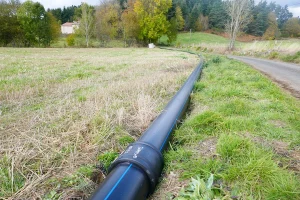
L’adoption croissante du PE100 dans l’industrie des canalisations a des répercussions positives à plusieurs niveaux :
En optant pour le PE100, les entreprises contribuent significativement à la réduction de leur empreinte écologique. La diminution de la consommation d’énergie lors de la production, combinée à la légèreté du matériau qui facilite le transport, permet de réaliser des économies substantielles en termes d’émissions de CO2.
La légèreté et la flexibilité du PE100 permettent d’optimiser les opérations sur les chantiers. Les engins nécessaires sont moins volumineux, voire parfois non nécessaires, ce qui se traduit par une réduction de la consommation de carburant et des perturbations sur site.
Les propriétés uniques du PE100, notamment sa résistance à la corrosion et son étanchéité, contribuent à l’amélioration globale de la qualité des réseaux d’eau. Les risques de fuites sont considérablement réduits, ce qui permet une meilleure préservation de la ressource en eau.
Un autre avantage majeur du PE100 est sa recyclabilité. À la fin de leur cycle de vie, les canalisations en polyéthylène peuvent être entièrement recyclées, contribuant ainsi à l’économie circulaire. Des entreprises comme Elydan proposent même des solutions de recyclage pour les déchets de leurs clients, fermant ainsi la boucle du cycle de vie du produit.