Coupling Solar Thermal - Geothermal (ST-Geo) ♨️❄️ The production of renewable heat and cooling is a major decarbonization challenge for the building sector between now and 2050. However, despite their

Milled underfloor heating is an ideal solution for installing an underfloor heating system without raising the finished floor level. This method can be used in both new construction and renovation projects!
“Some of my clients never would have thought they’d one day have underfloor heating in their homes,” says Laurent Bourienne, Managing Director for France at Plancher Chauffant Fraisé. The company offers an affordable solution, thanks to its various installation options and reduced constraints.
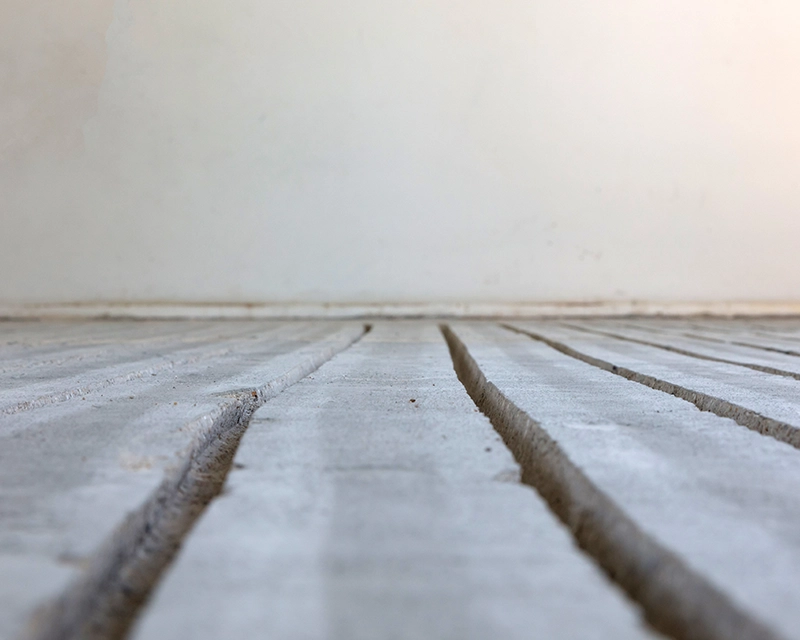
The principle: Grooves are cut (milled) into the existing screed or tile flooring to insert heating pipes, and the grooves are then filled in without pouring a new layer of screed over the top. This allows the existing structure to serve as a support for the heating system, which reduces thickness, shortens construction time, and minimizes stress on the building structure.
This system operates like a traditional hydronic floor heating system, powered by a boiler or a heat pump, but with less thermal inertia and greater thermal responsiveness. In some cases, it can also be used in cooling mode with appropriate capacity.
Milled underfloor heating is ideal for renovating houses, apartments, offices, or public spaces, even when existing tile flooring is retained as a subfloor. It can also be installed in new construction when a very thin, responsive system is desired, or to preserve as much ceiling height as possible.
Depending on the configuration, it is possible to mill:
• A new or existing subfloor.
• Tiles already in place.
• A substrate such as Fermacell or gypsum board installed over a wood floor (22mm OSB) or an existing slab.
This flexibility opens the door to a wide variety of projects: single-family homes, apartments, studios, sunrooms, offices, hotels, hospitals, and historic buildings where people prefer to limit major renovations.
A milled radiant floor heating system provides even heat distribution across the entire floor area, eliminating cold spots. So far, this isn’t much different from a traditional radiant floor heating system. Where a milled radiant floor heating system stands out is in its low thermal inertia, which allows for rapid temperature rise. This ensures excellent responsiveness and peace of mind.
Temperature control is possible on a room-by-room or zone-by-zone basis, allowing for precise temperature adjustments based on usage while preventing overheating. The absence of radiators frees up wall space, making it easier to arrange the interior and saving up to about 7% of usable space per room.
Underfloor heating operates at low temperatures, which reduces energy consumption compared to high-temperature radiators. Because it provides a higher level of comfort, you can set the thermostat about 2 °C lower than with a conventional system while maintaining the same sense of well-being.
Heating at a low temperature reduces fuel consumption and, consequently, the associated CO₂ emissions. Milled underfloor heating works particularly well with heat pumps and renewable energy systems such as geothermal energy, which further enhances its environmental benefits.
After inspecting the existing subfloor, the first step is to determine the installation layout and mark the future grooves.

Using a specialized milling machine, a groove is cut into the ground according to the specified plan, at the depth and width required to accommodate the Multitubo pipe. The depth is generally 17 or 19 mm.
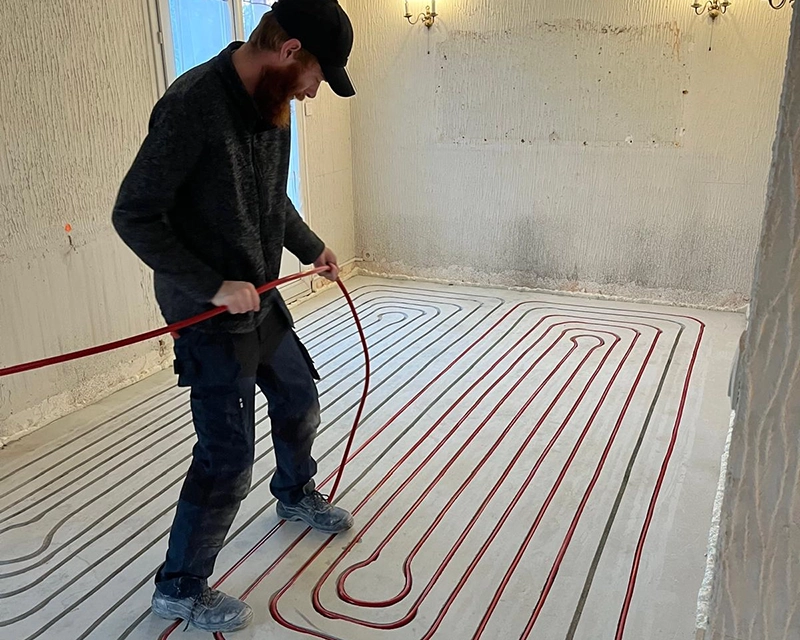
The red tubes are inserted into the grooves to form the heating circuits, then connected to a manifold.
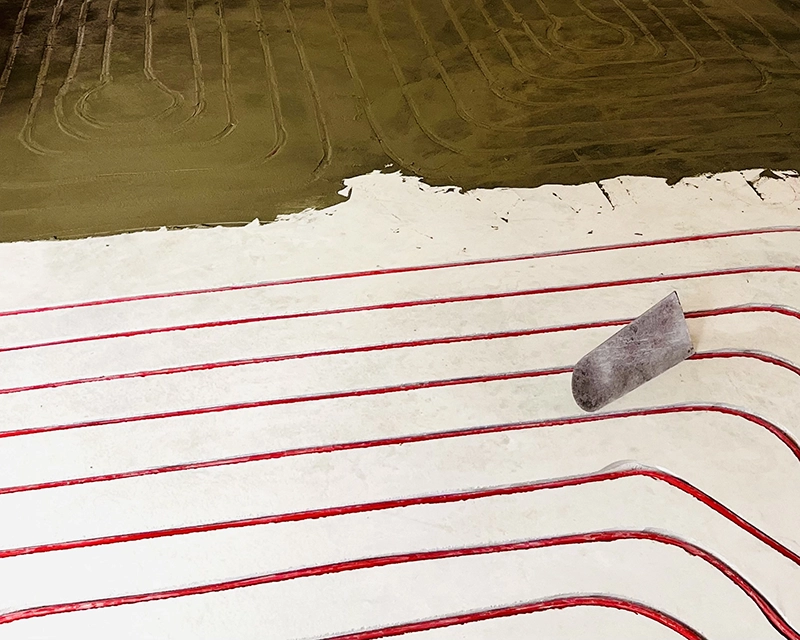
The grooves are completely filled in to restore a flat surface ready for the final flooring. You can then install tile, laminate, compatible hardwood flooring, or another suitable flooring material.
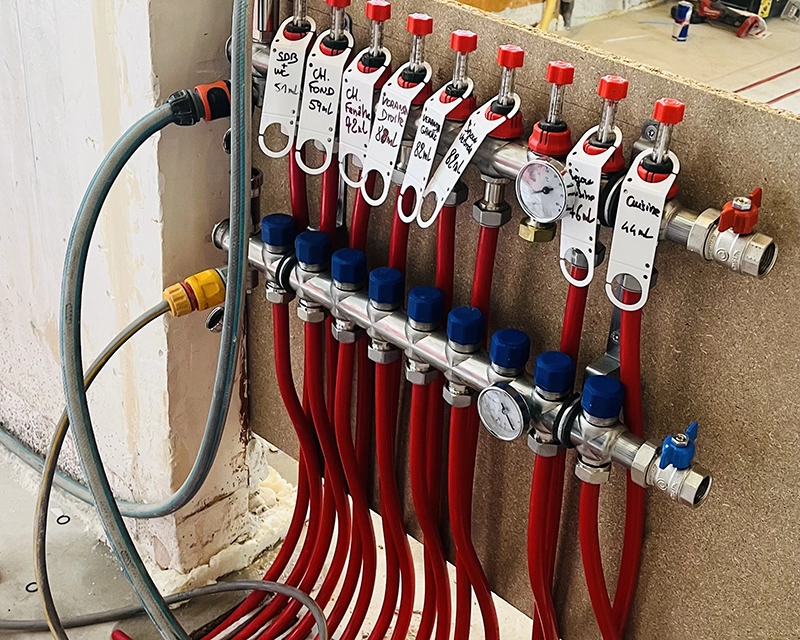
The system is filled with water, flushed, and tested; then the controls are configured for each room or zone to optimize comfort and energy consumption.
This process enables quick project completion, with short drying times, and minimizes disruption compared to completely removing the existing floor and pouring a new screed.
Plancher Chauffant Fraisé offers services for the installation of underfloor heating systems, from the preliminary design phase through to the final finishing. Contact the company for details about their services.
Milled Underfloor Heating is compatible with the following types of flooring: tile, new or existing screed, Fermacell or gypsum, and 22mm OSB.
Elydan offers red Multitubo tubing in DN16, packaged in boxes or on pallets ranging from 200 to 4,000 meters. This NF545-certified pipe is completely oxygen-tight and can withstand temperatures up to 60°C and a pressure of 6 bar.
The red Multitubo pipe for underfloor heating is made of PE-RT/AL/PE-RT, making it ideal for this type of installation.
Thank you to Plancher Chauffant Fraisé for their trust and cooperation.
Coupling Solar Thermal - Geothermal (ST-Geo) ♨️❄️ The production of renewable heat and cooling is a major decarbonization challenge for the building sector between now and 2050. However, despite their
Milled underfloor heating is an ideal solution for installing an underfloor heating system without raising the finished floor level. This method can be used in both new construction and renovation projects!