For a high-performance, sustainable water supply network, is the PE100 RCD up to the task? Sustainability is more important than ever in the construction of water supply networks, whether it be

Elydan, a specialist in PE and PP pipes for public works and a leader in its segment, construction and irrigation, has been awarded ISCC+ Certification. This international sustainability standard attests to the company's commitment to recycling materials in its manufacturing processes.
With the entry into force of RE2020, a building’s environmental footprint throughout its life cycle is now subject to new regulations. This regulation introduces two new indicators related to the impacts of climate change: one regarding energy use (IC Energy) and another covering all building components (IC Construction). These requirements for converting greenhouse gas (GHG) emissions into CO2 equivalents encourage all stakeholders in the construction industry to rethink building performance and use materials with a lower environmental impact.
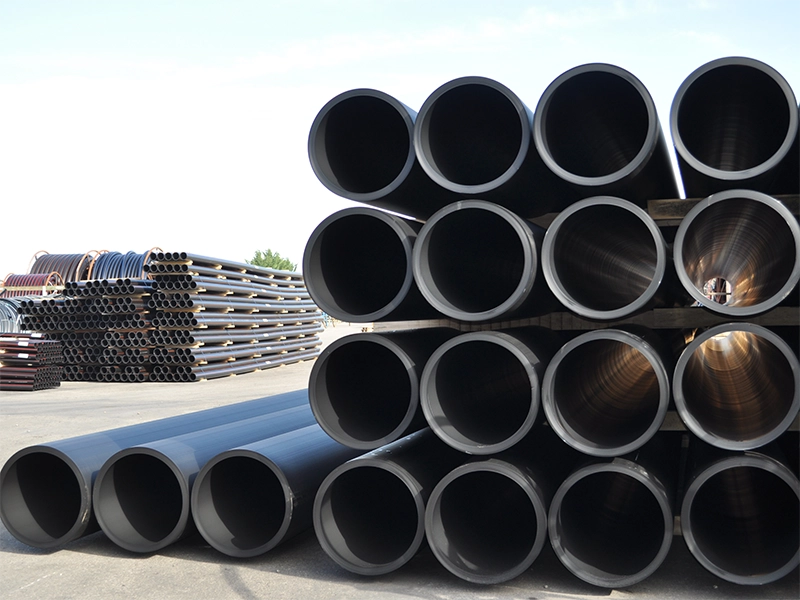
Elydan now incorporates plant-based or recycled raw materials into the production of certain products in its catalog, thereby manufacturing pipes from Bio-PE. This certification enables Elydan to offer ISCC+-certified materials and, as a result , products that fully contribute to the decarbonization of construction sites. The company was audited and certified by SGS, one of the world’s leading inspection, testing, and certification organizations, for its Saint-Etienne-de-Saint-Geoirs (38) site.
Elydan is thus able to offer these solutions to its customers to address the challenges of reducing the carbon footprint of construction sites and buildings. The first such project took place in Clermont-Ferrand, where GRDF installed the first Bio-Circulaire gas pipeline—supplied by Elydan—on behalf of Clermont Métropole Auvergne. This marks a symbolic milestone for the group, honoring this long-standing partnership.
" Thiscertification guarantees our customers the use and perfect traceability of raw materials.
"from non-fossil sources, all the way through the processing stage," says the Elydan Group management.
A few questions for Marc PALOMARES, Elydan Technical and Innovation Director:

If we can speak of constraints, the only one for us was administrative. As far as production is concerned, everything came together naturally, thanks to the close collaboration between the Technical and Production teams. No special adaptations were required on our production lines.
Yes, this type of material represents an optimistic alternative to the polymer materials known to date. The only question is that, as the Bio-PE used in our first production runs is a wood-based compound, we're dependent on the industry and its waste products.
Bio-based materials are now an excellent tool for achieving decarbonization goals and meeting the IC Construction (Construction Carbon Index) indicator under RE2020. This regulation introduces two new indicators related to the environmental impact of buildings, with an important goal: to design and build France’s future environments in line with three major objectives set by the government.
– Energy efficiency
– Reducing carbon impact
– Ensuring comfort during heat waves
The RE2020 regulation applies first to residential buildings, then to offices and primary and secondary schools, and finally to tertiary sector infrastructure.
IC Construction is an important indicator. Its aim is to steer construction towards less energy-intensive construction methods (wood or bio-sourced construction, for example), but also to encourage manufacturers to innovate in order to reduce the environmental impact of their industrial processes. All sectors should find their place in the RE2020, but will have to make efforts to meet the requirements. This is the case at Elydan, where we are working on our product offering to integrate biosourced solutions such as plant-based Bio-PE.
The traceability of our ISCC+ certified products is based on the mass balance principle.
Mass balance is a principle that aims to gradually incorporate material B (in this case, bio-based resin) into the total mass of products manufactured from material A (fossil-based PE). Sometimes the idea is that material B will eventually replace material A.
This is partly why ISCC+ certified products are rigorously tracked.
– To guarantee the project owner that bio-based materials are incorporated into their construction project.
– To enable future recyclers to properly redistribute the bio-based pipes they process.
– To track the flow of bio-based materials throughout the value chain.
The benefit of this traceability is that it allows companies to demonstrate the inclusion of bio-based materials, thereby attesting to an eco-responsible approach.
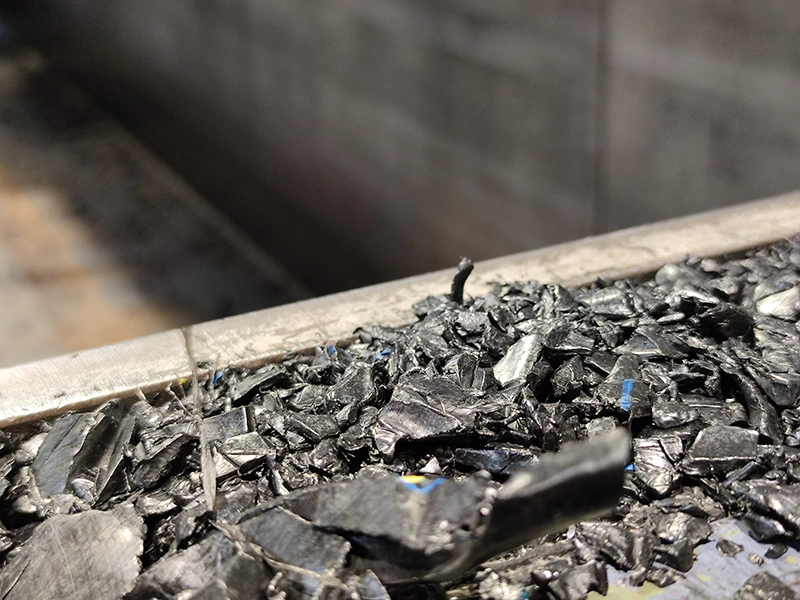
When we speak of Bio-PE, or Bio Based PE, we're talking about virgin polymers made from renewable or recycled materials of biological origin. They also require carbon-neutral energy to produce, as well as recycling at the end of their useful life.
To obtain a bioplastic, the plants are chemically treated to isolate the sugars which, at the end of the process, create the Bio-PE.
Derived from "biorefineries", biobased raw materials are obtained from renewable raw materials of biological origin, which are transformed into useful chemical compounds. These raw materials, or biomass, can be of first-generation origin, such as sugarcane, corn or vegetable oils.
For second-generation biomass, inedible waste is a more ethical and widely available resource. These are often found in the form of agricultural waste, plants or algae.
The Bio-PE used by Elydan is derived from second-generation biomass.
"This type of material represents a sustainable alternative to conventional polymer materials".
Marc PALOMARES, Elydan Technical and Innovation Director
The only concern is that, since the Bio-PE used in our initial production runs is a wood-based compound, we are dependent on the wood industry and its waste at the time of this writing. Elydan is, of course, counting on a sustainable agricultural production chain.
The use of bio-based products is not, in and of itself, a sustainable solution. It is the choice to use them that represents a solution for the future, since their use inevitably involves the use of fossil resources.
Recycling it also helps contribute to a carbon-free future. The recycling of Bio-PE is currently under study as we write this, but it already appears that mechanical recycling is emerging as the best option, both for preserving the material’s properties and in terms of environmental and financial costs. This is a boon for Elyrev and its Valorely solution, a program for collecting and recycling construction waste to reintroduce the material into new pipes.
For a high-performance, sustainable water supply network, is the PE100 RCD up to the task? Sustainability is more important than ever in the construction of water supply networks, whether it be
Coupling Solar Thermal - Geothermal (ST-Geo) ♨️❄️ The production of renewable heat and cooling is a major decarbonization challenge for the building sector between now and 2050. However, despite their