In March 2026, the near-total closure of the Strait of Hormuz disrupted global trade and destabilized numerous supply chains, such as those for petroleum products. With logistical challenges and rising raw material costs, what solutions have manufacturers—including Elydan—put in place?
Why the Strait of Hormuz Is a Key Hub for Global Logistics
An area through which up to 30% of the world's hydrocarbons pass
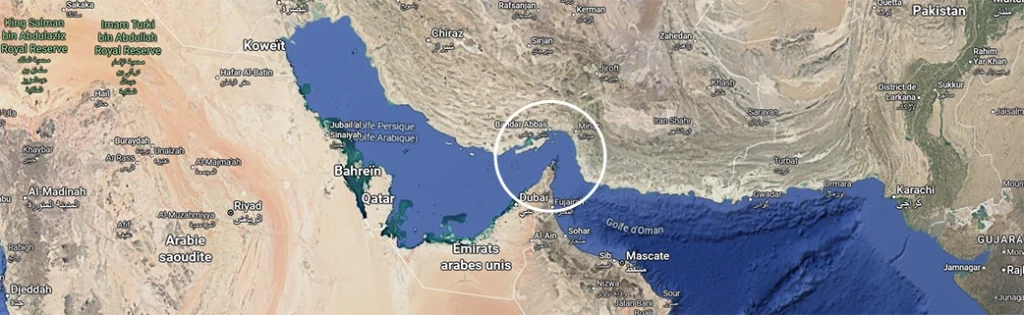
The Strait of Hormuz is a strategic waterway through which 20 to 30 percent of the world’s oil is transported, including 20 million barrels per day under normal conditions. Since late February 2026, approximately 350 oil tankers have been stranded there, causing an unprecedented slowdown in energy-related trade.
A bottleneck that disrupts international trade flows
The world's leading shipping companies (MSC, Maersk, CMA CGM, Cosco) have suspended their vessels, bringing traffic to a standstill and exacerbating the logistics crisis.
Strait of Hormuz - Google Maps
A surge in energy and raw material costs
Oil and Gas Prices Soar
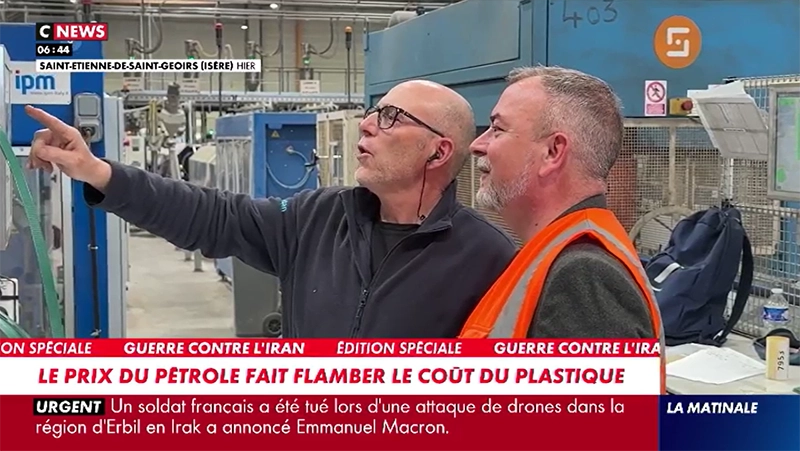
The closure of the Strait of Hormuz caused oil prices to surge by about 70% per barrel and drove up gas prices by 60% in Europe.
France is less vulnerable… but not spared
While France is not directly dependent on Iranian oil, the surge in global demand for oil from Saudi Arabia and other producers creates a scarcity effect, leading to higher fuel and transportation costs.
The blockade is causing shipping delays, disruptions in logistics flows, and long-term instability in transportation costs. These uncertainties threaten the stability of the entire supply chain. Experts estimate that this situation is causing a shock comparable to the one experienced in Europe in 2022: not an immediate shortage, but a disruption in the logistical balance and a sustained rise in prices.
How are manufacturers adapting to this crisis?
Develop alternative sources of supply
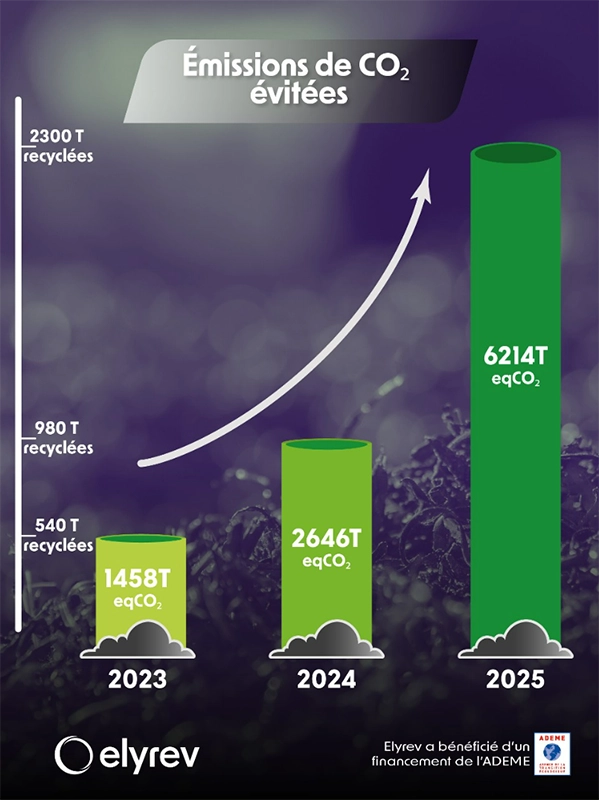
ELYDAN is accelerating its transition with a focus on its in-house recycling operation, ELYREV, which already produces 10 to 15 percent of the recycled HDPE used in production. In addition to providing a stable supply, Elyrev’s rHDPE offers a clear advantage in terms of CO₂ emissions. Based on data shared by ADEME, ELYREV estimates that the 2,300 metric tons of material recycled in 2025 prevented 6,214 metric tons of CO₂ equivalent emissions.
The blockade of the Strait of Hormuz is, above all, a global logistical crisis, the effects of which are immediately felt in delivery times, costs, and market stability. For French companies that depend on it, the challenge is to continue production while securing their supply chains and accelerating their transition to materials that are less vulnerable to geopolitical tensions.
Elydan obtains international ISCC+ certification Elydan, a specialist in PE and PP pipes for public works and a leader in its segment, construction and irrigation, obtains ISCC+ Certification. This
PE100: A sustainable revolution in the pipe industry In a world where sustainability and energy efficiency have become top priorities, the pipe industry is undergoing a veritable revolution thanks to PE100.